
Shree Natnagar Shodh Samsthan
(The Raghubir Library and Research Institute)
(The Raghubir Library and Research Institute)
“If ever a Central Institute of History is set up in free India, the Raghubir Collection will be its indispensable nucleus.” – Sir Jadunath Sarkar.
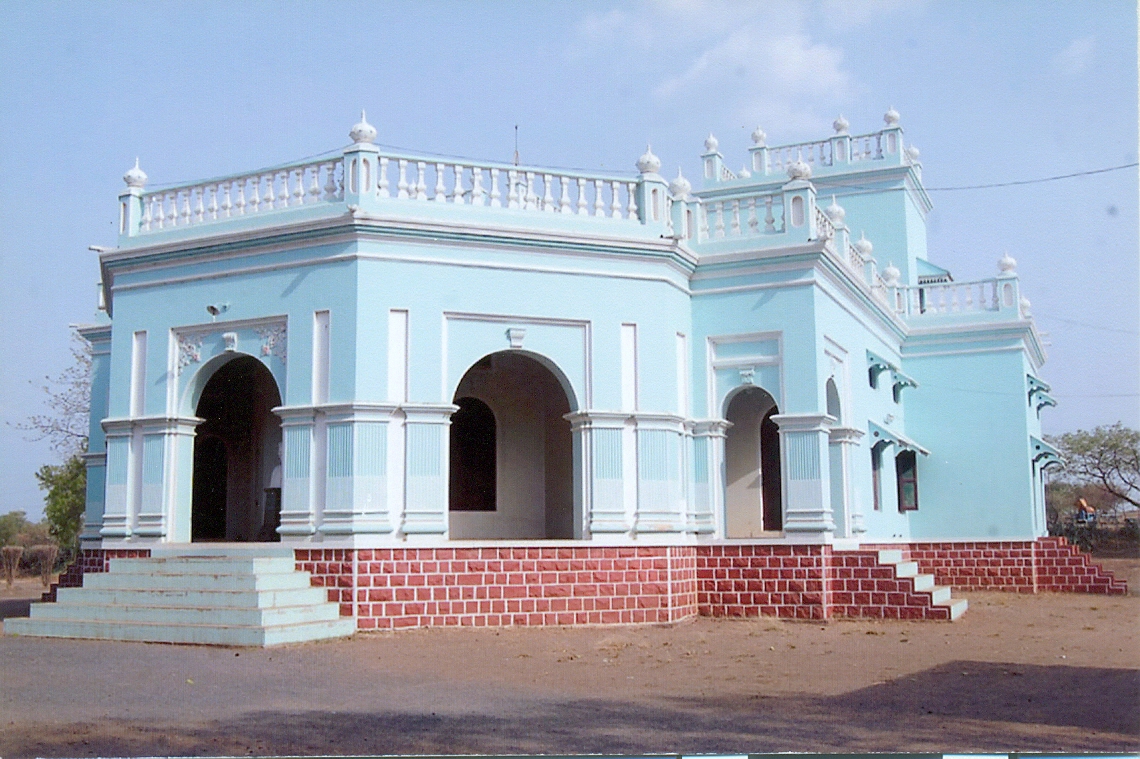
To realize the above-mentioned dream seen by Acharya Yadunath Sarkar in 1949 AD, Dr. Raghubir Sinh M.A., D.Litt. L.L.B. Established Shri Natnagar Research Institute, Sitamau (Malwa-M.P.) on August 14, 1974. He included Shri Raghubir Library Sitamau and his other collections in it. The objective of establishing the institute was not only to protect the collection of Shri Raghubir Library and to make it richer and richer, but also to make the previously accessible facilities permanent, strong, and ever-developed for the researchers and historians coming to Sitamau for historical research work and studies. It also had to be organized on an ongoing basis.
Shri Raghubir Library is the main unit of the institute. This library was established around 1936 AD and is continuously developing. In the first twenty years, the instructions and suggestions of Acharya Yadunath Sarkar in this regard were completely followed. The usefulness of this library and its special importance for the researchers working on medieval Indian history, especially on the history of the 17th and 18th centuries AD, have been fully appreciated by the well-known senior Acharya Yadunath Sarkar among the Indian historians as well as among all the well-known historians.
Presently Shri Raghubir Library has more than 45,000 published books. Most of them contain rare books on history in Hindi, Marathi, Persian, and English. There are 5458 manuscripts in the library, which include 1330 texts related to history and mythology, 1438 related to theology, 59 related to Vedas and Upanishads, 41 related to music and dance, 117 related to Jainism, 46 related to philosophy, 97 related to Ayurveda, 28 related to Geeta and Quran, There are 248 handwritten texts related to astrology and mathematics, 297 related to Hindi literature, 1649 related to poetic drama and ornamentation, 2 related to architecture and craft, 80 related to Tantra Mantra, 15 related to geography, 3 related to yoga, 19 related to various arts. These texts are obtained from different places and collected under different names. These collections are named after the names of related persons or places. Like Kaviraja collection has 1565 books, the Sitamau collection has 443 books, the Guru Nirbhaysingh collection has 278 books, the Raghubir collection has 283 books, the Parasmal collection has 466 books, the Balmukund collection has 109 books, the Bhalerao collection has 1027 books, Mahua collection has 65 books and Pathak collection has 1222 books stored in the institute.
Apart from these books and manuscripts, the library also includes the British Museum, London; India Office Library, London; Royal Asiatic Society, London; Microfilm copies of about 100,000 letters from manuscripts held in the Bodleian Library, Oxford, the Bibliotheca Nazionale, Paris and other notable collections in Europe are also accessible here. About 30,000 photocopies and microfilms of Persian inscriptions stored in the Peshwa office collection of Poona are also stored here. This library has the honor of being the first to import ‘Library Record’, a device for reading microfilms, from England to India in 1938. Here another new microfilm reader has also been purchased.
Well-known journals that regularly appear in the library include Royal Asiatic Society, London; Asiatic Society, Calcutta; Nagari Pracharini Patrika, Varanasi and Bharat History Reviewer’s Board, Pune; The Islamic Culture, Hyderabad; Bengal Past and Present; The Indian Historical Review; The Economic and Social History Review etc. are especially noteworthy.
Copies of most of the major Hindi and English magazines from 1921 till now are available in this library. Complete collections of proceedings of the conferences of the Indian History Congress, Indian Historical Records Commission, and many other such provincial organizations are available in this library.
Handwritten Persian texts and papers on the history of the Delhi Sultanate, Mughal period India, and post-Mughal period Indian history are a major base material of this library. Hundreds of handwritten texts, microfilms, and papers containing the basic material of Indian history from the 14th century to the end of the 18th century are stored in this library.
History of Sindh : Some manuscripts giving information about the history of Sindh are also stored here, among which ‘Beglarnama’ and ‘Tarkhannama’ are notable.
Delhi Sultanate : With the Muslim invasions in the 12th century, the Muslim kingdom was established in Delhi at the beginning of the 13th century. Some manuscripts related to the Indian history of the Sultanate period are also accessible here, among which ‘Manushat-e-Mahru’ written by Abdulla Mahru is especially noteworthy. It provides information about the administrative and social life of the 14th century.
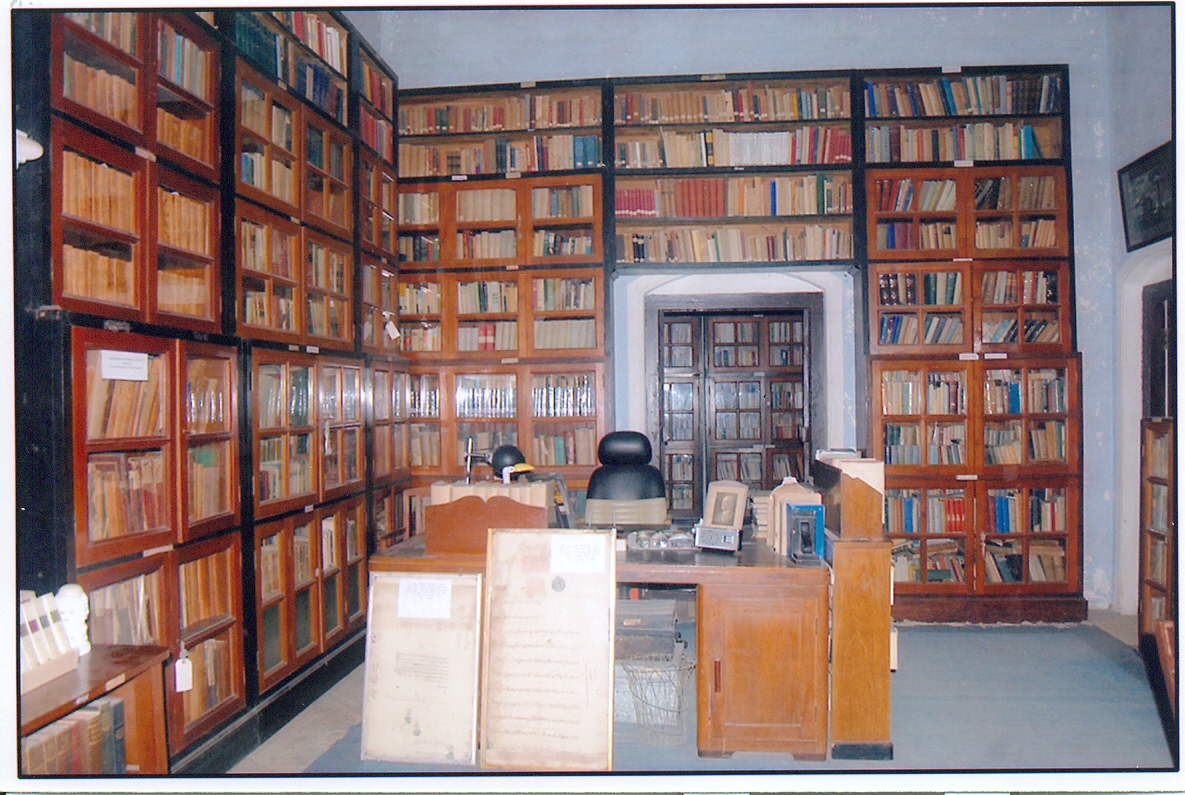
Malwa and Gujrat : Almost all messages relating to the history of Malwa and Gujarat are available here. “Students willing to resuscitate the lost chapters of history will be obliged to visit the Raghubir Library for its wealth of rare manuscripts on Malwa and contemporary history of Gujarat.” (Prof. Nirod Bhushan Roy, Essays presented to Sir Jadunath Sarkar, p. 281). In these special mss. “Tarikh-i-Gujarat”, Maasir-i-Mahmud Shahi, Tarikh-i-Nasiri, Tarikh-Muzaffar Shahi, and Tarikh-i-Salatin-i-Gujarat are available in microfilm, photo-print or mss. forms.
Mughal Emperors and Later Mughals : According to Sir Jadunath Sarkar “The Raghubir Library has specialized in the history of the Delhi Padishah and the local dynasties of Malwa, Gujrat and the Rajputana to the points of exhaustion.” Numerous microfilm and mss. relating to Mughal Emperors – Humayun, Akbar, Jahangir, and Shah Jahan are available here. Important mss. like Lataif-ul-Akhbar and Padishah-Nama, by Muhammad Waris about Shah Jahan and others relating to the Mughal Emperor Aurangzeb like Adab-i-Alamgiri. by Sadiq Muttalibi, Ahkam-i-Alamgiri, by Inayetullah: Fatuhat-i-Alamgiri, by Ishardas Nagar, Tarikh-i-Dilkasha, by Bhimsen and Haft Anjuman, by Udairaj along with hundreds of letters and sanads are preserved here. Other noteworthy Persian mss. are “Faiyyazul-Qawanin”, Tarikh-i-Muhammadi”, by Mirza Muhammad (2 vols.), “Tarikh-i-Hind” by Rustam Ali “Mirat-i-Aftabnuma”, by Shah Nawaz Khan, “Tazkirat-us-Salatin-i-Chagtai”, by Kamwar, Mirat-ul-Waridat, by Warid, “Tarikh-i-Nadiri” by Mirza Muhammad Mahdi Khan Astrabadi, “Tazkira-i-Waqaya”, by Anand Ram Mukhlis, “Tarikh-i-Muzaffari” by Muhammad Ali Khan Ansari and “Muntakhab-i-Akhbar” (2 Vols.).Apart from Persian Mss. relating to the reigns of Aurangzeb and his descendants, Shri Raghubir Library is unique in its collection of Akhabarat-i-Durbar-i-Mualla of the reigns of Aurangzib, Azam Shah, Bahadur Shah, Jahandar Shah and Farrukhsiyar. These State newsletters are collected from the collections of the Royal Asiatic Society, London, and the Jaipur State Archives, Jaipur.
Maratha-British : There is also a unique store of manuscripts, microfilms, and photocopies of Persian handwritten texts, newspapers papers, etc. related to the Indian history of the Maratha-British period (1761 to 1818 AD). The Persian material collected here is also very important for the history of various Maratha states like Scindia, Bhonsale, Holkar, etc. which are not available anywhere else in India.
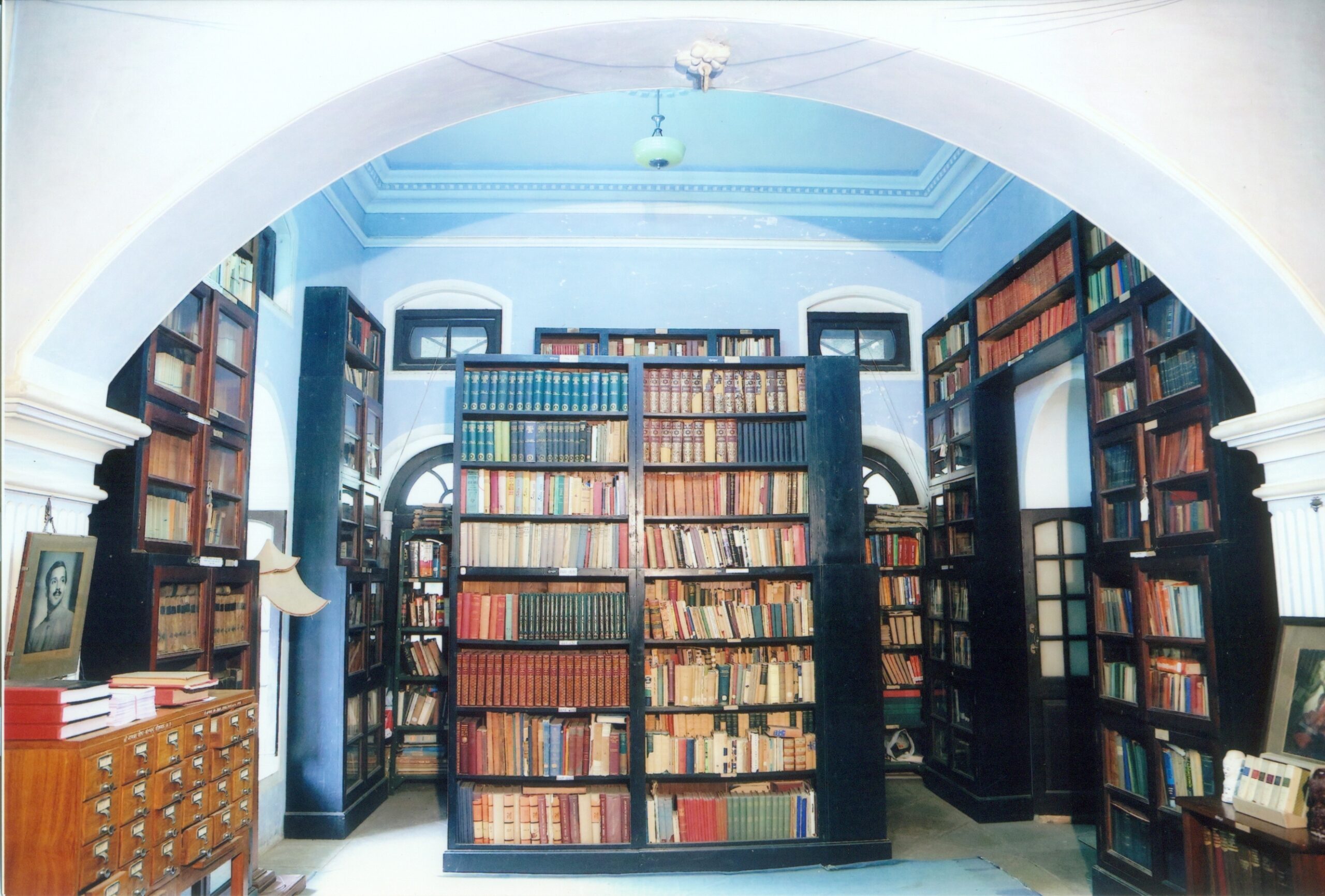
Rajput states have made a special contribution to the formation of pre-modern India. Therefore, without the study of the history of the Rajput states of Rajasthan, medieval Indian history will remain incomplete. For correct examination and writing of the history of pre-modern India, the study of handwritten texts and papers written in Rajasthani and Hindi is essential. Raghubir Library contains hundreds of handwritten texts, throwing light on the history of states like Rajasthan, Malwa, mainly Mewar, Marwar (Jodhpur), Amber (Jaipur), Bikaner, Dungarpur, Rampura and Sitamau, etc. from the 14th century to the 19th century. Microfilms of texts, thousands of papers, coins, copper plates, etc. are stored here. For information about the modifiers, some such important handwritten texts are mentioned here.
Fame of Jodhpur State: It contains a detailed authentic description of the Rathore rulers of Marwar from the beginning till Maharaja Mansingh (1843 AD).
Mundiad Ri Khyat : (Volume I) contains details from Rao Siha of Marwar to the reign of Maharaja Vijay Singh (1761 AD).
Mundiad Ri Khyat : (Second Volume) It contains details of the last years of Maharaja Vijay Singh’s rule till the reign of Maharaja Man Singh (till 1843 AD).
Udaibhan Champawat Ri Khyat: It contains the details of the Rathore rulers of Marwar till Maharaja Jaswant Singh (1678 AD) and the complete genealogy of various Khamps of the Rathore dynasty till then. The original copy of this famous book was locked inside the walls of Jodhpur city in 1679 AD, which was discovered during the demolition of the walls in the last decades of the 19th century.
Jalore Pargana Ri Vigat (two books): It contains the complete contemporary past of Jalore Pargana of Marwar as well as the villages etc. of Jalore Pargana of Marwar during the reign of Maharaja Jaswant Singh of Jodhpur.
Bikaner Re Rathodaan Ri Khyat, written by Sindayach Dayaldas: is a well-known book on the Bikaner royal family,, after the initial history of the Rathores, there is a detailed history of the said state from the establishment of the Bikaner state till 1851 AD.
Fame of Shahpura State (four parts): This contains the details of Shahpura State from its beginning till 1869 AD. Besides, it also contains copies of the then decrees, sanads, permits, and letters.
Fame of Dungarpur State: It contains details of Dungarpur State from its beginning till 1906 AD.
Fame of Chandravats of Rampura: This contains the details of Chandravat (Sisodia) rulers of Rampura from the beginning till 1792 AD.
Collection of fame of the Sitamau royal family: All the available fame of the Sitamau royal family is collected here. The details of this royal family till 1912 AD are available in them.
Detailed generations: It contains a brief description of the branches of Mewar’s Rana Mokal to Maharana Raj Singh and Jaisalmer’s Bhatis, Rampur’s Chandravats and Chauhans, and Panwars from the beginning to the middle of the 17th century.
Jaipur Records: In this, copies of papers of Jaipur state from 1639 to 1888 AD are collected in six volumes.
Prithviraj Raso: The oldest copy of the medium version of this book written by Chandbardai, dated 1636 AD, is preserved in the collection of the Royal Asiatic Society, London, its microfilm is available here.
Khuman Raso, Dalpat Krit: The microfilm and photo print of this much-discussed and well-known historical book on the history of Mewar, typed by Shri Bhandarkar Oriental Research Institute, Pune and stored in the Royal Asiatic Society, London, is available here. It contains the history of Mewar state from Bapa Rawal to 1662 AD.
Chittor-Udaipur Patnama: There is a detailed history of Mewar from the beginning till 1856 AD and details of Sisodia Jagirdars.
In the year 1933, Dr. Raghubir Sinh contacted Shri Krishnavitthal Athale to obtain the authentic copies of the Mandloi office (Indore) in the context of his research book “Malwa in Transition”. After the death of Shri Krishnavitthal Athale, the entire “Athale Office” was acquired in 1945. There are not many original papers in it, but there are only copies made in Devanagari script by Shri Krishnavitthal Athale himself, about whose original papers, etc. no information is available now.
Some notable base material collections of Aathle Collection:

Hingane-Office: It stores copies of 504 letters from 1776 AD to 1835 AD, which contain details related to Northern India.
Gore Office: 204 letters from 1787 to 1805 AD are stored in it.
Mandloi Office: 284 letters from 1662 to 1816 AD are compiled in it. These letters contain mentions of the activities of the Marathas in Malwa.
Dhar Office: It stores letters of Peshwas like Bajirao I, Balaji Rao, Madhavrao, etc. from 1721 to 1776 AD.
Bhausahibanchi Assal Bakhar of Ringangaon: This Bakhar was written by Naro Sakharam in Hastinapur about the battle of Panipat. Its copy was prepared by Raghunath Rajaram in Sevdha (Datia) by writing it on March 1, 1761 AD, the copy made from the same copy is stored here.
Gulgule Office: This office stored in the institute contains about 6,000 papers dating from 1733 to 1822 AD. According to Govind Sakharam Sardesai, the main feature of this collection is that “all the material available before this on the Maratha period is related to the events of Poona and South India, or is incomplete. But in the Kota (Gulgule) office, information about almost all the events from the initial campaign of Marathas in Northern India till the establishment of British rule (1733 to 1822 AD) is available.
Marathi (Modi) papers of Mandu office: Xerox copies of about 322 Marathi papers are stored in the collection of the former landlord and Kanungo Bhagwati Prasad of Mandu, obtained courtesy of Pandit Vishwanath Sharma. These letters are useful for the economic history of the Panwar state of Dhar. Apart from these texts, Xerox copies of many texts, book registers, etc. have also been stored in the institute.
Material related to Rampura: Rampura was the capital of Chandravat rulers till the beginning of the 18th century AD and thereafter the Pargana headquarters during the period of Maratha occupation. Very important materials related to that area, Sanad Bahi of Rampura, Rampura inscriptions (Modi and Persian), and Xerox copies of Barnisi registers of Rampura are stored in the institute.
Dewas Collection: From Dewas Chhoti Panti, the institute has received very important historical handwritten inscriptions (Marathi-Modi) and original papers of the eighteenth century purchased by Dewas from Kulkarni. These inscriptions throw light on the administrative, economic, and social aspects of the Panwar state. These inscriptions are as follows – Dafat Patra, Yadi, Terij-Patra, Taleband Mokasa, Hisheb Sardeshmukhi, Hibesh Ajmas Babati Sardeshmukhi, Jhaada and donation letter. The material related to the history of the ancestors of Panwar Gharana etc. collected by Shrivastava, a researcher appointed by the Dewas Chhoti Panti State, will prove beneficial for the researchers on the subject. Along with handwritten records, the institute has also received an important collection of published books from there.
Lele Collection: A total of 25 files of historical material related to the Panwar state of Dhar were received from the Central Museum, Indore, Xerox copies of which have been stored in the institute, which will prove useful for the historical chronicle of Dhar.

DR. Raghubir Sinh Marg, Sitamau,
Dist Mandsaur (M.P.)
shreenatnagar@yahoo.co.in, info@natnagar.org
07426-222910
(The Raghubir Library and Research Institute)
DR. Raghubir Sinh Marg, Sitamau,
Dist Mandsaur (M.P.)